Shanil Virani

I am a passionate science educator, an award-winning astronomer, creator/host of Our Island Universe, & co-author of “Daughter of the Stars”, a coffee table astro-photography photo-book about light pollution and what we lose when we lose the night.
I did my graduate work at Yale University where I studied supermassive black holes lurking at the centers of galaxies in the nearby and distant Universe. Prior to Yale, I spent 5+ years at the Harvard-Smithsonian Center for Astrophysics as part of the Science Team of the Chandra X-ray Observatory, NASA's flagship space-based X-ray mission. I am humbled to have received 7 group achievement commendations either from NASA or from The Smithsonian Institution for my contributions to the mission. In 2009, I was awarded the Chambliss Astronomy Achievement Award medal by the American Astronomical Society for exemplary research as a graduate student and in 2013, I was appointed a Solar System Ambassador by NASA's Jet Propulsion Laboratory (JPL). Solar System Ambassadors communicate the excitement of JPL's space exploration missions and information about recent discoveries to people in their local communities.
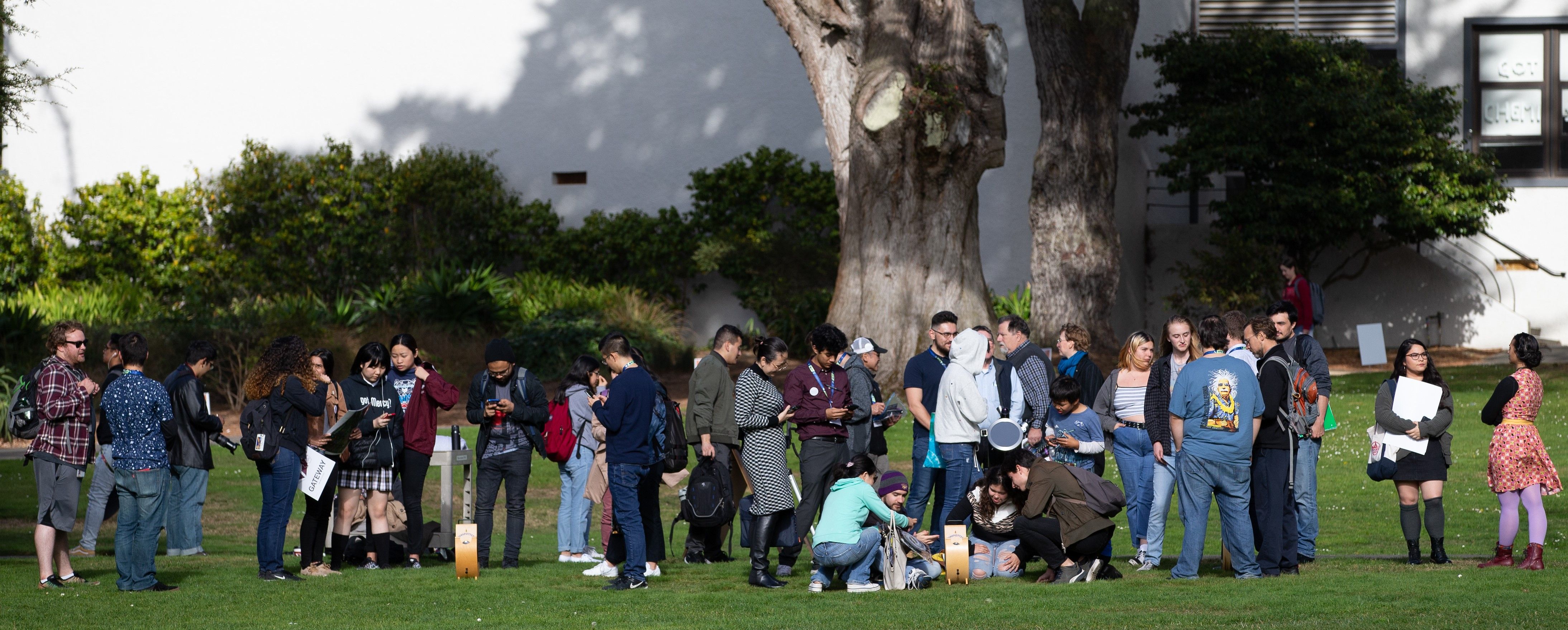
I joined the Astronomical Society of the Pacific’s Eclipse Ambassador team in 2023 to help raise awareness and help prepare local community astronomy enthusiasts share the wonder of two solar eclipses that will crisscross the United States. Eclipse enthusiasts will partner to engage their local communities in advance of the eclipses to enjoy the awe and wonder of this unique alignment.
I also created and host Our Island Universe, a weekly online podcast and science education platform that looks at all things space and how what goes on "up there'' affects our life "down here''. The central theme is to promote the public understanding of science, our exploration of the natural world, and how modern science is really a continuation of our species' natural desire to understand the cosmos and our perspective within it.
I am a passionate educator and communicator of science. You can find me on X and Instagram as @shanilv to continue your conversation with me!