CURRENT ASP PROGRAMS AT-A-GLANCE
The heart and soul of the ASP’s mission is connecting astronomy to people, connecting people to learning opportunities, and building bridges between teachers and students – no matter what the classroom looks like: school, museum, planetarium, national park, state park, nature center, astronomy club, city sidewalk, online, backyard.
New for 2025! While the solar eclipses are now behind us, exploring solar science hasn’t stopped! Of more than 70 Eclipse Ambassadors who applied to a culminating field experience, nine college students will travel to Alaska from January 4–11, 2025 for a Winter Field Experience at UA Fairbanks!
Our Learn@ASP workshop and courses portal has new offerings in 2025! "In the Footsteps of Galileo" and "Big Bang Storyline" kick off the year! Visit the Learn@ASP portal for details to register.
Explore our diverse programs and resources and see how they can help you better understand and share the wonder of astronomy as the gateway to science literacy.
Amateur Astronomers
-
Nine college students traveled to Alaska from January 4–11, 2025 for a Winter Field Experience at UA Fairbanks!
This one-week “Eclipses to Aurora” opportunity will introduce students to space physics graduate studies in topics such as electromagnetism, observations of aurora, data reduction, and instrumentation. Fairbanks, Alaska is just south of the Arctic Circle so participants will get a sense of what it's like to live and work in near constant darkness.
-
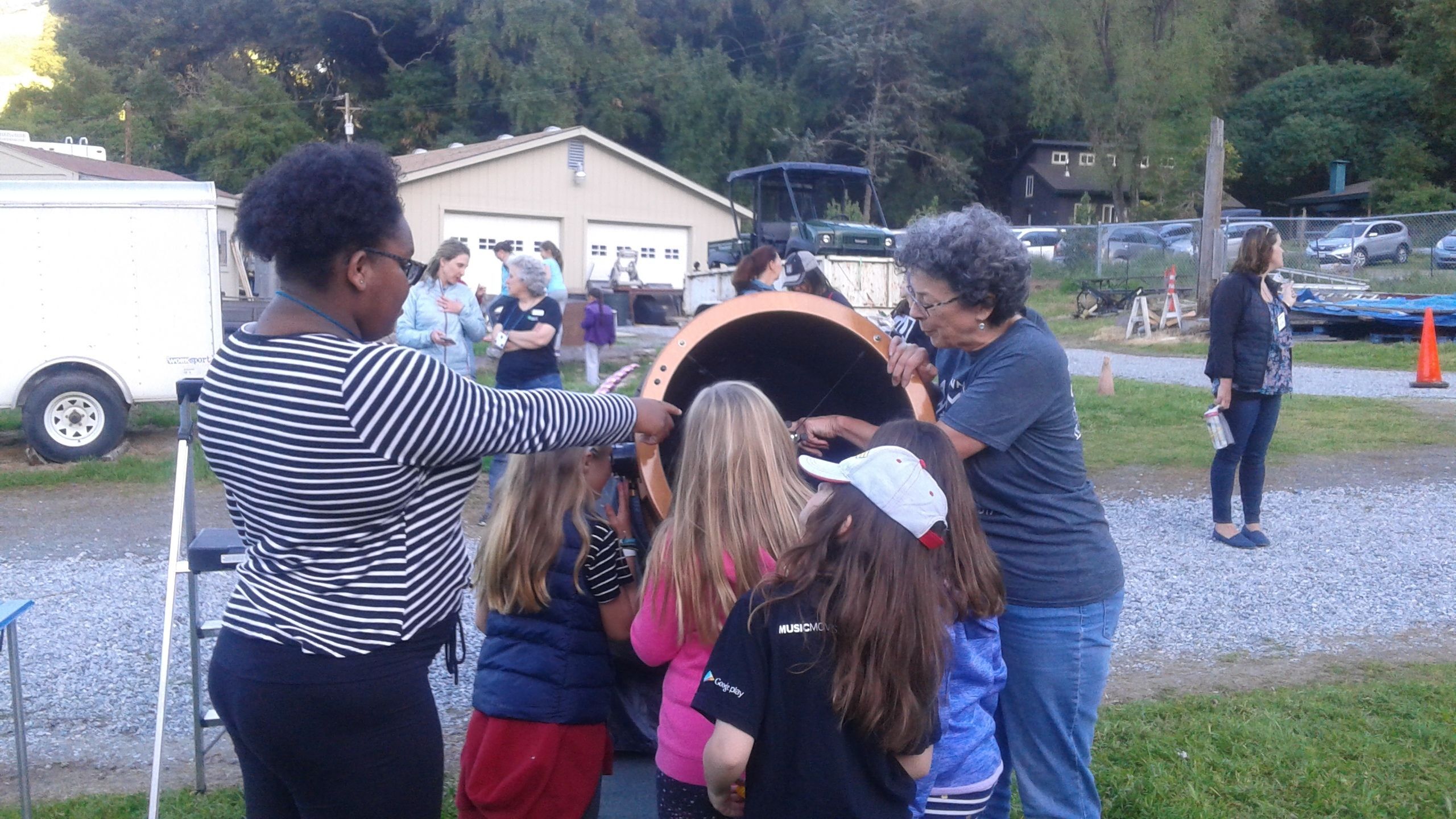
The NASA Night Sky Network is a community of more than 450 astronomy clubs across the U.S. that share their time and telescopes to engage the public with unique astronomy experiences. The ASP provides training and materials to enhance clubs outreach activities, and inspires more than four million people through their participation in 30,000+ events.
Learn@ASP Workshops
-
Learn@ASP is the portal to courses, workshops, webinars, and resources from the Astronomical Society of the Pacific. 2025 offers new workshops for educators, scientists, interpreters, and amateur astronomers.
Higher Education/Early Professionals
-
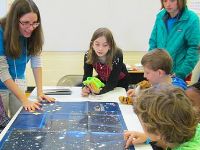
OTSF is a research-to-practice National Science Foundation (NSF) project led by the ASP, in collaboration with Oregon State University, the Portal to the Public Network via the Institute for Learning Innovation, and the National Radio Astronomy Observatory (NRAO). The project developed a set of on-the-spot feedback strategies and professional development experiences to help early-career research scientists with their public engagement activities.
Informal Educators
-
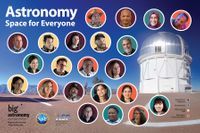
Big Astronomy: People, Places, Discoveries delivers a unique learning experience for planetarium visitors around the world by integrating virtual interactions with those living and working at Chilean observatories with curricular resources and a planetarium show. ASP created Informal Science activities released in 2020 to correlate with the planetarium show followed by adapted and tested materials for better engagement with visitors who are blind or have low vision.
-
Astronomy from the Ground Up (AFGU)
AFGU provided informal science educators and interpreters with new and innovative ways to communicate astronomy. AFGU created a community of hundreds of educators from museums, science centers, nature centers, and parks around the U.S., who continue to enhance and expand their capacity to address astronomy topics for their visitors.
Astronomy @ Home
The ASP has long provided educators, outreach coordinators, and amateur astronomers with astronomy-focused activities, workshops, webinars, and toolkits to share their passion for astronomy and promote science literacy. Astronomy @ Home was created in 2020 to support caregivers & families of all ages with a monthly Live Storytime, an archive of readings, and activities for ages 3-15.
Visit the collection of Storytime books and Activities
